Why do Christians think a prayer is all it takes to get to heaven?

Some have complained that Christianity promises that just by saying a prayer anyone gets a free trip to heaven. A mass murderer can do horrible things all his life and go to heaven when dies because he said the correct words right before being strapped into the electric chair. A loving mother who worked hard all her life to raise good kids will go to hell if she doesn’t ask Jesus for forgiveness. This seems unfair, unjust and just plain wrong. Why do Christian’s teach that all it takes for even the worst person to go to heaven is saying the right words any time before dying?

This objection fails to understand two vital truths about the Bible’s teaching about salvation. Salvation is not received by saying the right words. The prayer of salvation is not a magic incantation which opens heaven’s door at the persons whim. The prayer of salvation is the outward response of saving faith. Praying the right words without saving faith will not bring salvation. The words alone have no power to give a person entrance to heaven. What brings salvation is Biblical faith.

Biblical faith is a personal conviction of the truth of God’s Word particularly the truths about sin, man’s inability to do anything to save himself, the deity of Jesus, the death of Jesus for sin and the resurrection of Jesus. Biblical faith is the conviction that these truths are true about yourself. This goes beyond a general acceptance of a broad truth. This is the personal acceptance as fact your own guilt before God, your inability to remove your guilt and bring salvation, that Jesus died to pay the punishment of your sin, Jesus is alive forever and Jesus offers you salvation. Biblical faith obeys the commands of the gospel. Saving faith turns to Jesus trusting Him, and Him alone, for salvation. A prayer for salvation is the visible expression of that last element of saving faith. Asking for salvation is only the tip of the iceberg. Underneath is the massive internal conviction of that brings salvation to those who believe.

Salvation has nothing to do with anything the person does. The murderer is not going to hell for his murder. The loving mother is not going to heaven for her selflessness. Salvation is never determine by measuring a persons good against his bad. Salvation cannot be achieved by any actions of men because the standard for entrance into heaven is absolute perfection. To enter heaven one must be completely righteous without the least taint of sin. “Be ye therefore perfect, even as your Father which is in heaven is perfect.” (Matthew 5:48) God’s standard of perfection is impossible for any person to achieve. Eternal life is given to those who realize their failure to measure up to God’s standard. Those who trust Jesus are promised heaven because Jesus’ perfect righteousness is transferred to the sinner. This is exactly why salvation is so difficult for many to understand. The work has been done. The one who is saved must do nothing. Salvation has been earned, in its entirety, by Jesus. Anyone who relies on Jesus to save them will be saved and have eternal life. Anyone who relies on his own goodness will not be saved.

God’s salvation has nothing to do with how much a person deserves to be saved. God justly saves the worst of men at the very last moment because He applies the infinite righteousness of Jesus to their great guilt. God justly saves the best of men any time they turn to Him for salvation because He applies the righteousness of Jesus to their great guilt. God saves all who will rely only on Jesus for forgiveness and eternal life.
Are Jehovah’s Witnesses Christian?

Jehovah’s Witnesses are a familiar sight on many doorstops. The witnesses seek to introduce others to their church and their beliefs through a series of pamphlets and Bible studies. They claim to be a Christian denomination and to uphold the major doctrines of Biblical Christianity. Are the beliefs of the Jehovah’s Witnesses Christian belief? Are they consistent with historical orthodoxy? Are their beliefs in line with what the Bible says must be believed to be saved?

The Jehovah’s Witnesses are not a Christian church by any historical definition of the Christian orthodoxy. None who hold to the doctrines of the Jehovah’s Witnesses are genuine Christians. What is the basis for making such a bold declaration? First, and most significantly, the Jehovah’s Witnesses are not Christian because they deny truths which the Bible defines as necessary for salvation. The first and second epistles of John state in very definite language that any one who denies Jesus is the promised Savior and Son of God is not saved and is not of God. The official teaching of Jehovah’s Witnesses about Jesus is that He is a great spirit being, the first spirit created by Jehovah (they also deny the Trinity). Jesus was a god (note the small “g”), but not the second person of the Trinity. Jesus is not eternal, not equal with the Father nor possessor of the infinite glories of Jehovah. In Jehovah’s Witnesses theology Jesus is the greatest of created beings. They also teach that when Jesus came to the earth, he gave up all his divine nature. In their Bible studies they teach, “He was not a spirit-human hybrid.” Jehovah’s Witnesses deny that Jesus is God, that Jesus is God made flesh and that Jesus remained fully God while taking to Himself full humanity. All of these truths are crucial for salvation. One cannot be saved without first believing Jesus is God the Son and God become man.

The errors regarding the person of Jesus are sufficient to keep from salvation any who believe their lies, but Jehovah’s Witnesses compound their heresies about Jesus with heresies about salvation. According to their teaching, Jesus’ death does not wash away all sin forever. Jesus’ death makes it possible for men to be saved, but does not accomplish salvation for them. According to the Jehovah’s Witnesses salvation is gained by faith in Jesus, by participation in God’s visible theocratic kingdom (the Jehovah’s Witness organization) and by steadfastly maintaining confidence that Christ made salvation possible. They teach that none are securely saved until the survivors of Armageddon chose to turn to God and submit to His rule. Jehovah’s Witnesses teach a salvation that is a mixture of faith and works. Their inclusion of lifelong good works as essential to salvation is a denial of the gospel. Galatians 1 describes this kind of gospel as no gospel and its teachers as ones who are accursed for their falsehoods.

The Jehovah’s Witnesses are false teachers who must not be heeded or encouraged in their false doctrines in any way. This does not mean they are beyond the hope of salvation. Those who will repent of their false doctrines can turn to God and find pardon for their sin and eternal life through Jesus Christ.

What are the most important things for a Christian to consider as he votes?

Our nation is racing towards the climax of the election cycle. Right now we are in the middle of the presidential primaries. On Tuesday the states of Michigan, Mississippi and Idaho will be having presidential primary elections. Every election leaves the Christian with a some very difficult decisions. The Bible informs every area of the believer’s life. This includes electoral decisions. How does a careful Christian honor God in his voting choices? Because no election is a clear cut choice between good and evil the Christian has to give more weight to certain issues when casting his ballot. What does the Bible says are the most important things to consider when voting?

Proverbs 14:34 says, “Righteousness exalteth a nation, but sin is a reproach to any people.” Christians must consider which candidates will promote Biblical righteousness. The likelihood of finding a candidate with whom you agree completely is almost nonexistent. The possibility of finding a candidate who has a largely Biblical morality seems to be getting slimmer and slimmer. The reality is the Christian will probably have to chose the “lesser of two evils”. In doing so, much discernment must be exercised. The Christian must not vote for candidates who have built their political platform on the promotion of immorality and godlessness. Whenever possible, Christians should seek to vote for those candidates who have shown themselves to be promoters of Biblical righteousness (not necessarily of the ten commandments, but of those things which are in line with Biblical morality).

Romans 13 declares that God ordained the government to be a terror to evil doers. One must select officials who will punish evil. Government officials, from the lowest to the highest, are the servants of God. He appointed them, even the worst of them, to restrain evil. This means elected officials must be restraining evil in their own lives. Proverbs 29:2 says, “When the wicked bear rule, the people mourn.” A wicked man in power is not going to promote justice. He is not going to restrain evil. The Christian should seek those leaders who are honorable men of integrity that will uphold justice.

A Christian should not vote for a person just because the candidate professes of Christianity. While some politicians do have a credible testimony of salvation, far too many take the name of a Christian to attract Christian voters. A competent person of integrity may lead with greater ability and righteousness than a nominal Christian who crafted an identity to attract Christian votes. Nor should a Christian vote with the assumption that the right leaders will fix America. While our elected officials wield great influence over the direction of America, the needs of this nation are heart needs. The transformation of the heart is only accomplished by Christ. No elected leader, no legislative body, no judge and no system of laws will ever make a person truly righteous. Vote with hope but do not place that hope in men. Trust in Jesus, hope in the eternal kingdom He has secured and remember only the gospel will change this country.

What is the Trinity

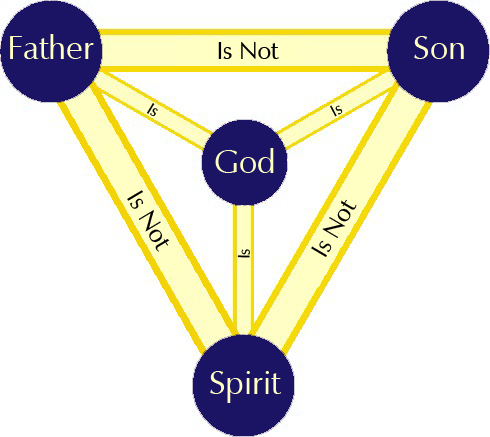
Basic Christian doctrine teaches that God is Triune. As foundational as the doctrine of the Trinity is to Christianity, the teaching is difficult to understand. The Trinity seems to be paradoxical and impossible. The doctrine of the Trinity can be summed up with the statement, “God is One God who is Three.” This doctrine does not teach God is three Gods, that God is one God with three different manifestations of His personality, nor that the three persons of the Trinity are each one third God. The doctrine of Trinity is that God is One God who consists of three persons. Each person of the Trinue Godhead is fully equal with the others and each possesses the full attributes of God. All three persons of the Trinity are eternal, all powerful, all wise, all knowing, holy, loving and perfect. Each person of the Trinity is fully God. Each is different and distinct from the other. The Father is not the Son and the Son is not the Holy Spirit. Each is different and distinct but they cannot be divided from the other. The Father, Son and Spirit do not exist separately from one another.

The starting point of the Trinity is the singleness of God. The Father, Son and Spirit are each declared to be fully God. The deity of each member of the Trinity is explictly declared in Scriptures (John 1:1; Acts 5:3-4; 1 Corinthians 8:6). It is implicitly declared in the work and nature of God such as creation, sovereignty, omnipotence and eternality. The distinction in the Godhead becomes evident in God’s dealing with man. God the Father administrates the plan of salvation and hears and answers prayers. The Son is the redeemer of man who became man. Through the death of Jesus, God the Son, man can be forgiven. The Son is the head of the church who intercedes for believers. The Son is Mediator between God and man. The Spirit applies salvation to the heart of men, convicting of sin and regenerating those who believe. The Holy Spirit is sent from the Father by the Son to indwell the believer. The Holy Spirit enables Christians to serve in the church. Each member of the Trinity exercises a different and distinct function in relation to man.

The doctrine of the Trinity is a fundamental doctrine discovered by a comparison of the Bible’s teachings. This doctrine is not a new development. This doctrine is not a New Testament development. This great doctrine does not rest upon a single verse which declares and defines the Trinity. The doctrine of the Trinity rests upon the comprehensive statements about God found throughout the Bible. It is built on statements like Deuteronomy 6:4 which proclaim a single God, “Here O Israel, the Lord our Lord is one Lord.” When the statements of the singleness and unity of God is compared to werses such as Matthew 28:19, 1 Peter 1:2 and 2 Corinthians 13:14 the Triune nature of God begins to be realized. The Bible declares God to be comprised of Father, Son and Spirit. Each of these is revealed as unique from the others. Each is taught as possessing all the attributes of God. Though the doctrine of the Trinity is not explicitly taught in one place in the Bible, it is nevertheless a doctrine unmistakably revealed throughout Bible. The basic principles of the Trinity are found as early as Genesis 1. Though the Trinity is a difficult doctrine to understand which will never fully be explained by men, it is a Biblical truth that must be believed by all those who profess to believe God’s Word.

Trinity 2

What is Lent?

The season of Lent began this week. Lent always starts on Ash Wednesday and continues until the Thursday before Easter. Lent is a season of forty days of self denial intended to be a time of intense spiritual devotion joined with self denial. Many who observe Lent “fast” from specific substances these six weeks. Others severely limit their food intake. Traditionally the Sundays of Lent are not fast days. The Catholic church prescribes that all the Friday’s during Lent be days of fasting from meat. In more recent years people have taken to giving up non-food items. Some will use Lent to “fast” from the internet, television, sports, text messaging, facebook, speeding, complainging and a host of other things. Others see Lent as a time to volunteer at at soup kitchens or attend church services more faithfully. Some churches have special prayer services or community worship services during Lent. In brief, Lent is seen as a season of self denial and spiritual renewal that is kept by Christians of all denominations.

The observance of Lent developed within the Catholic church during the 300’s AD. Because Lent has its root in early Catholicism those Christians who are part of church with a strong emphasis on liturgy and the church calendar tend to observe Lent. The forty days of fasting is based upon Jesus’ forty days of fasting in the wilderness before beginning His public ministry. A specific Biblical foundation for observing Lent is hard to find. The Bible makes no reference to a special, church wide season of fasting and self-denial. The Bible does teach self denial, but the self denial it teaches is a lifelong process of dying to self and living according to the commands of God’s Word. The Bible teaches about fasting, but it does not command Christians to fast. Nor does the Bible teach a required season for fasting, or of fasting from certain foods, whether it be on Friday, during early spring or at any other time of the year. Fasting is assumed in the New Testament, but the only commands associated with it are that fasting be done without drawing attention to the fact you are fasting. The summary of this then is that Lent is not commanded or required for Christians. While there is nothing sinful about forty days of fasting and renewed focus on one’s walk with God, those who would participate need to be careful about what is motivating observance of Lenten traditions.

Penance is the theological motivation for self denial during Lent. Penance is a form of self-punishment to show a person is genuinely repentant for his sins. Catholic teaching regarding fasting during Lent states that one is remembering the suffering of Jesus on the cross and uniting himself with His sacrifice. Some outside the Catholic church see a penitential aspect to their participation in Lent. Penance is a punishment of self to show genuine repentance. While this doctrine seems to have some worthwhile points (who doesn’t want to see real proof that a person is truly sorry for his sins?), penance is contrary to the Biblical doctrines of salvation by grace alone. When Jesus died on the cross, He suffered the full punishment of sin. When one trusts Jesus for salvation all past, present and futures sins are forgiven. Jesus endured the entire punishment of every sin the believer has committed or will commit. Since Jesus paid it all no other punishment is necessary. Not only is self punishment unnecessary, Paul says in Galatians that any who teach works of the flesh as part of salvation are teaching a different gospel. The doctrine of penance has an appearance of being spiritual, but it actually denies the fullness of Jesus’ work and relies instead on human effort.

Setting apart a season of self denial does not by itself draw one closer to God. The Bible does not teach self denial for self denial’s sake. The Bible does not teach self-denial as a shortcut to a closeness with God. One grows in Godliness by use of the regular means which God has given to His people. These means are Bible study, prayer, church attendance, good works, spreading the gospel and participating in the ordinances. Self denial to grow closer to God is a good thing, but the regular, year round means of spiritual growth cannot be bypassed by a special season of intense spiritual activity.

Does God accept to Himself a Muslim’s sincere worship of Allah?

C.S. Lewis was an excellent author and noteworthy Christian thinker. The recent big screen success of The Lion, the Witch and the Wardrobe, Prince Caspian and The Voyage of the Dawn Treader have brought a few of his works to popular attention. The Chronicles of Narnia is a seven book series that tells the adventures of the Pevensies children and their relatives in the land of Narnia. The last book of the series tells of the overthrow of Narnia by their enemies the Calormenes. The Calormenes are a warlike people who worship the vulture headed, winged god Tash. The Narnians worship the true god and creator of their world, Aslan. C.S. Lewis very intentionally uses his work to depict some of the great doctrines of Christianity. Aslan is an unmistakeable picture of Jesus. Aslan’s death on the stone table in place of Edmund retells the death of Jesus on the cross for mankind. Likewise, Lewis includes other obvious imagery. The Calormenes are a very Turkish people obviously intended to bear strong resemblance to the Muslim countries.

In The Last Battle a sincere young Calormene soldier who devoutly worships Tash comes face to face with Aslan. The soldier is terrified because he has served Aslan’s enemy all his life and he now expects to be slain by Aslan. The Lion does not kill the young man but tells him something very surprising. All the good and sincere worship that was heaped upon Tash was accepted by Aslan as given to himself. Because Tash and Aslan are complete opposites, all evil done in Aslan’s name is actually done for Tash. All good done in Tash’s name is actually done for Aslan. Though the worshiper was mistaken in the object of his worship Aslan received all good as done for him.

The theological point Lewis appears to be making is that all those who worship in goodness and sincerity will be received by God. Though they think their worship is to a different god, the true God will accept all honorable and devout worship. This argument is still being made today. Some of those who say Allah and God are the same mean to say that it doesn’t matter what you call your god. If you are sincere in your attempts to do good and serve your god, then the true God will accept your worship. Is this true? Does God accept all sincere worship as if it was done for Him?

Recently I answered the assertion that Allah and God are really the same god. In March of last year I addressed why sincere worship is not by itself acceptable to God. God does not accept well intentioned but misplaced worship, because He accepts none apart from Jesus. Jesus Himself said, “I am the way, the truth, and the life: no man cometh unto the Father, but by me.” (John 14:6) Only Jesus has done that which is acceptable to God. God does not accept any man because of sincerity or goodness. God does not accept any worship apart from Jesus. God only accepts those who have been made righteous in Jesus.

The apostle Paul confronted the Athenians for their sincere but wrong worship. Acts 17 shows that they were deeply religious. They were so careful in their worship they built a statue to the unknown god in case they accidentally overlooked the worship of a god. Paul came to Athens and taught them of the the god they did not know. He did not comfort them that God accepted their sincere worship. He told them who is the true God and instructed them to repent of their wrong worship because God would judge them. Their well intentioned worship was not acceptable to God. In fact, their rejection of the gospel showed they were not seeking to truly worship God. Their worship of another god was rebellion against God. They did not want to worship the true God. So it is with all who worship another god. Their worship is not acceptable to God because it is in fact rebellion against Him. Only those who have trusted Jesus for the forgiveness of sin are redeemed by His blood and are accepted of God.

Does Christianity promote violence and hatred?

The recent upswing of Islamic terrorism has brought violence in the name of Allah to the front of many people’s minds. For some this is also a time to resurrect claims that Christianity is a religion of violence and hatred. Some do this out of a general hatred of all religions asserting that religion is the greatest cause of war and violence. Some do this in an attempt to defend Islam by pointing out that Christianity has some infamous events in its own history. Does Christianity promote hatred and violence? Is the Bible full of hate and genocide?

The Bible does not lack wars, violence, murder and many other despicable evils. However, a description of violence is not the same as a prescription for violence. If this were the case one could argue that history books promote violence and hatred. To argue Christianity causes violence one has to show that Christianity either commands hatred between men, that the commands are based in hatred for people, or that the teachings will inevitably result in hatred. One can not simply point to violent passages in the Bible and say that Christianity is hateful. One must show that the Bible promotes violence. This is no easy claim to make.

The Bible includes many examples of wretched behavior. Even more, throughout Christian history men have done evil things in the name of Christianity. Yet these historic examples do not prove Christianity is hateful. Such examples prove a very different claim. The examples of violence in the Bible and history support a central tenet of Biblical teaching: humanity is hatefilled because man has rebelled against His Creator.

The teaching of the Bible is that the heart of man is the source of all hatred and violence. Titus 3 says, “For we ourselves also were sometimes foolish, disobedient . . . living in malice and envy, hateful and hating one another.” The Bible also teaches the worst wickedness of man is not only the result of his own natural bent toward sin, but it is also the result of rebellion against God. When man rejects the God of the Bible for a god of his own creation, the result is that God lets man go into all manner of great wickedness (Rom 1). The claim of the Bible is that man apart from God turns to great violence and all manner of acts of hatred. Religion is not the root of anger and violence among men. The rejection of the God of the Bible aggravates the violent heart of men.

The Bible teaches an ethic that is contrary to violence. Those who have committed violent acts in the name of God have done son despite clear Bible teaching to the contrary. The Bible commands over and over again to love one another. In the book of Genesis God repeatedly condemns the violence of men. In the law to Israel God commands they are to love one another. The importance of love for one another is a major theme throughout the Old and New Testaments. The moral principles of the Bible are built on the basic principle of love, love for God and love for others. The Bible does not promote war, violence, hatred or racism. All such evils are the result of man’s sinful nature, not the teaching of Scripture.

How did the apostles die?

The Bible briefly records the death of one apostle, 1) James the son of Zebedee and brother of John. Acts 12 tells us that Herod the ruler of the region began to persecute the church. This persecution took place a dozen to fifteen years after Jesus’ death, burial and resurrection. During the persecution of the Christians by Herod, he had James beheaded and then imprisoned Peter with the intention of executing him after the passover. All but one of the rest of apostles were killed for preaching the gospel. History gives to us accounts the apostles deaths, and while we believe this history to be generally reliable, we must be careful to not put too much weight on these histories.

The two most widely known apostles, Peter and Paul were both put to death at the command of Nero and are believed to have been killed in Rome. After several imprisonments (which are referred to in the New Testament), 2) Paul was beheaded outside of Rome. 3) Peter was captured by Roman soldiers and crucified. It is said that he requested to be crucified because he was not worthy to be crucified in the same manner as Jesus was.

It is said 4) Phillip was whipped, thrown in prison and then crucified in what is today northern Turkey. 5) Matthew is believed to have preached in northern Iran, near the Caspian Sea, and also in Ethiopia. In Ethiopia Matthew was beheaded. 6) Thaddeus is thought to have been crucified in Turkey. 7) Bartholomew went to India, where it is claimed he translated the gospel of Matthew into Hindi. He was beaten and then crucified by the people.

8) Matthias, the one elected by the apostles to take Judas’ place is believed to have been stoned in Jerusalem and then beheaded. 9) Andrew, Peter’s brother, is said to have preached in western Asia and was crucified in a city in eastern Turkey. Andrews is traditionally described as one in which two ends were stuck in the ground, making an X shape instead of the more typical t-shaped cross. 10) Thomas made his way into India where he was killed by being stabbed with a spear. 11) Simon the Zealot preached in West Africa before heading north into Britain where he was crucified. 12) James the less is believed to have lived in Jerusalem to the age of 94 when he was beaten, stoned and then clubbed to death.

The only apostle to not die a martyrs death was still intensely persecuted for His preaching of the gospel. His failure to be martyred was not the fought of his persecutors. John, the brother of James and son of Zebedee is said to have started a number of churches throughout Asia Minor. He was sent to Rome where he was cast into a large pot of boiling oil. Miraculously he was not injured. Later he was sent into exile on a small island called Patmos. He eventually was able to return to the city of Ephesus, where he died a natural death at about 95 years old.

How should Christians respond to the recent Supreme Court ruling on same sex marriage?

By this time Christians all across America have heard about and responded to the recent decision by the Supreme Court. Tens of thousands of words have been written on this issue, before and since the decision to make same sex marriage legal for the nation. A wide range of responses have been suggested. For some professing Christians, the response has been joyful. For many others, the response has been anything but glad. Those who have followed this ministry know that Everlasting Truths affirms the Biblical position that homosexuality in all forms is sin. Same sex marriage is not something to be celebrated but mourned.

A full discussion of the Biblical response would need to address several different levels of relationships. A few hundred words does not allow for a full discussion, so this article will consider the response of a Christian to a government which has completely run off the moral rails. Before getting into the Biblical instructions, it is worth noting the historical setting of the books of the New Testament. The Roman Empire was filled with depravity the level of which America has not yet reached. Things that would today be seen as heinous and criminal were accepted as normal throughout the Roman Empire. To those who opposed the wickedness of Rome, very few options were available. Dissent could easily result in imprisonment. Christians found themselves persecuted throughout the empire. The instructions of the Bible were not written to a Christian people in a Christian nation. They were written to Christians in the middle of an empire full of immorality and persecution.

To the individual Christian the Bible makes a number of very clear statements. Two passages summarize the main points of how a Christian should respond. 1 TImothy 2 teaches that Christians are to pray for the government. The Christian must pray earnestly and diligently for every level of governmental leadership. The Bible does not teach the believe to pray for power or prosperity in the nation. The prayers of the Christian are prayers for the promotion of peace in the nation and peace for the Christian so he can live a Godly life without opposition and so the gospel can be spread without hindrance.

Romans 13 teaches that every government, even a vile, wicked government, is of God. Therefore, submit to the government. Though in this matter, and maybe others down the road, the Christian will have to disobey the laws of the land, this does not excuse the Christian from obedience to the all the rest of the nations laws. A Christian cannot justly refuse to pay his taxes because the government promote wickedness. Submit to the government in all areas save those which would directly cause the Christian to violate the Word of God.

Honor the government. Every individual in leadership in the nation has been given his authority by God and is to be treated with respect and reverence. Though Christians should abhor certain morals, must oppose some decisions and will disagree with many policies, all such differences must be expressed in a respectful fashion. The Christian is commanded to show honor and respect to the individuals entrusted with rule in our land.

While the Christian must at all times honor the nation’s leaders and in most cases must obey the civil laws, the Christian cannot obey the mandates to support same sex unions. No Christian should support same sex marriage, regardless of the dictates of justices or the consequences to Christians. Fines and imprisonments are real possibilities. No matter the threats, Christians cannot go along with the flow. The Christian must continue to speak the truth, no matter the consequences. “Honour all men. Love the brotherhood. Fear God. Honour the king.” (1 Peter 2:17)

Why is faith the deciding factor in salvation?

Most Christian churches insist that faith is necessary for salvation. Even among those groups who believe certain acts or rituals must be practiced to gain salvation, faith is still taught as holding a major role, usually the decisive one, in a person’s salvation. The pastors who are a part of the Everlasting Truths ministry unapologetically preach that one only receives salvation through faith in Jesus. Why is faith such an important part of being saved?

The first reason, which is sufficient by itself, is the Bible commands faith. The message of salvation is called by the Bible “the gospel”. The gospel is defined a set of facts about Jesus (He is God, He became man, He died on the cross, His death was to pay the punishment of men’s sin, following His death He was restored to life again and the Bible is the accurate record of these salvation truths). The gospel is that these truths of salvation are to be received by faith. The apostles Peter and Paul describe unbelievers as those who “obey not the gospel”. The book of Hebrews describes rejecting salvation as disobedience to God. In Romans 16 Paul says the gospel is published throughout the world, “for the obedience of faith.” 1 John 3:23 commands we believe in Jesus for salvation, “This is (God’s) command, that we should believe on the name of His Son Jesus Christ. (1 John 3:23) Faith is a command of God. As the Author and Provider of salvation, God has every right to determine the conditions by which He will give salvation and to forbid salvation to those who will not come to Him under the terms He requires.

Second, faith is required for salvation because it is impossible for a person to save himself by his own effort. Salvation is either accomplished by something the person does for himself or by something Jesus does for the person. The Bible denies that any one can be good enough or obedient enough to save himself. Titus 3 says salvation is, “not by works of righteousness which we have done.” Ephesians 2 says salvation comes, “not of works, lest any man should boast.” Romans 3 and Galatians 2 both declare that the keeping of God’s laws are totally unable to bring righteousness to man. The problem is so great, that the one who attempts to earn salvation by his obedience is in fact condemning himself with every failure to obey. Faith is necessary to be saved because salvation is not attainable by the effort or goodness of any individual. Salvation is a gift that must be received, but can never be earned.

Faith is the deciding factor in salvation because salvation is only possible by the grace of God. He who refuses to receive God’s gift, whether it be by the unbelief that denies the truths of salvation or the unbelief that thinks a person can be saved by his own ability, cannot be saved because he has rejected the only means of eternal life. Faith in Jesus for salvation is necessary because it confesses the individual’s inability to save himself. Faith asks God to give a person the salvation he cannot gain in any other way. Christianity does not teach the necessity of faith so it may condemn all those who do not believe as Christians believe. Christianity teaches faith as necessary for salvation because God declares the necessity of faith. Faith is necessary for salvation because only God saves, and God only saves those who rely fully on Him, and Him alone, for forgiveness of sin and eternal life with Him.