What is the Trinity

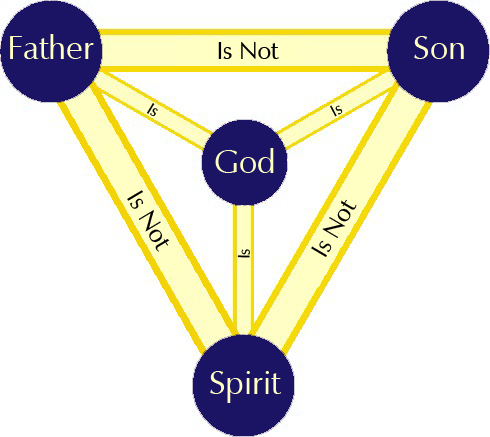
Basic Christian doctrine teaches that God is Triune. As foundational as the doctrine of the Trinity is to Christianity, the teaching is difficult to understand. The Trinity seems to be paradoxical and impossible. The doctrine of the Trinity can be summed up with the statement, “God is One God who is Three.” This doctrine does not teach God is three Gods, that God is one God with three different manifestations of His personality, nor that the three persons of the Trinity are each one third God. The doctrine of Trinity is that God is One God who consists of three persons. Each person of the Trinue Godhead is fully equal with the others and each possesses the full attributes of God. All three persons of the Trinity are eternal, all powerful, all wise, all knowing, holy, loving and perfect. Each person of the Trinity is fully God. Each is different and distinct from the other. The Father is not the Son and the Son is not the Holy Spirit. Each is different and distinct but they cannot be divided from the other. The Father, Son and Spirit do not exist separately from one another.

The starting point of the Trinity is the singleness of God. The Father, Son and Spirit are each declared to be fully God. The deity of each member of the Trinity is explictly declared in Scriptures (John 1:1; Acts 5:3-4; 1 Corinthians 8:6). It is implicitly declared in the work and nature of God such as creation, sovereignty, omnipotence and eternality. The distinction in the Godhead becomes evident in God’s dealing with man. God the Father administrates the plan of salvation and hears and answers prayers. The Son is the redeemer of man who became man. Through the death of Jesus, God the Son, man can be forgiven. The Son is the head of the church who intercedes for believers. The Son is Mediator between God and man. The Spirit applies salvation to the heart of men, convicting of sin and regenerating those who believe. The Holy Spirit is sent from the Father by the Son to indwell the believer. The Holy Spirit enables Christians to serve in the church. Each member of the Trinity exercises a different and distinct function in relation to man.

The doctrine of the Trinity is a fundamental doctrine discovered by a comparison of the Bible’s teachings. This doctrine is not a new development. This doctrine is not a New Testament development. This great doctrine does not rest upon a single verse which declares and defines the Trinity. The doctrine of the Trinity rests upon the comprehensive statements about God found throughout the Bible. It is built on statements like Deuteronomy 6:4 which proclaim a single God, “Here O Israel, the Lord our Lord is one Lord.” When the statements of the singleness and unity of God is compared to werses such as Matthew 28:19, 1 Peter 1:2 and 2 Corinthians 13:14 the Triune nature of God begins to be realized. The Bible declares God to be comprised of Father, Son and Spirit. Each of these is revealed as unique from the others. Each is taught as possessing all the attributes of God. Though the doctrine of the Trinity is not explicitly taught in one place in the Bible, it is nevertheless a doctrine unmistakably revealed throughout Bible. The basic principles of the Trinity are found as early as Genesis 1. Though the Trinity is a difficult doctrine to understand which will never fully be explained by men, it is a Biblical truth that must be believed by all those who profess to believe God’s Word.
Trinity 2

Does God accept to Himself a Muslim’s sincere worship of Allah?

C.S. Lewis was an excellent author and noteworthy Christian thinker. The recent big screen success of The Lion, the Witch and the Wardrobe, Prince Caspian and The Voyage of the Dawn Treader have brought a few of his works to popular attention. The Chronicles of Narnia is a seven book series that tells the adventures of the Pevensies children and their relatives in the land of Narnia. The last book of the series tells of the overthrow of Narnia by their enemies the Calormenes. The Calormenes are a warlike people who worship the vulture headed, winged god Tash. The Narnians worship the true god and creator of their world, Aslan. C.S. Lewis very intentionally uses his work to depict some of the great doctrines of Christianity. Aslan is an unmistakeable picture of Jesus. Aslan’s death on the stone table in place of Edmund retells the death of Jesus on the cross for mankind. Likewise, Lewis includes other obvious imagery. The Calormenes are a very Turkish people obviously intended to bear strong resemblance to the Muslim countries.

In The Last Battle a sincere young Calormene soldier who devoutly worships Tash comes face to face with Aslan. The soldier is terrified because he has served Aslan’s enemy all his life and he now expects to be slain by Aslan. The Lion does not kill the young man but tells him something very surprising. All the good and sincere worship that was heaped upon Tash was accepted by Aslan as given to himself. Because Tash and Aslan are complete opposites, all evil done in Aslan’s name is actually done for Tash. All good done in Tash’s name is actually done for Aslan. Though the worshiper was mistaken in the object of his worship Aslan received all good as done for him.

The theological point Lewis appears to be making is that all those who worship in goodness and sincerity will be received by God. Though they think their worship is to a different god, the true God will accept all honorable and devout worship. This argument is still being made today. Some of those who say Allah and God are the same mean to say that it doesn’t matter what you call your god. If you are sincere in your attempts to do good and serve your god, then the true God will accept your worship. Is this true? Does God accept all sincere worship as if it was done for Him?

Recently I answered the assertion that Allah and God are really the same god. In March of last year I addressed why sincere worship is not by itself acceptable to God. God does not accept well intentioned but misplaced worship, because He accepts none apart from Jesus. Jesus Himself said, “I am the way, the truth, and the life: no man cometh unto the Father, but by me.” (John 14:6) Only Jesus has done that which is acceptable to God. God does not accept any man because of sincerity or goodness. God does not accept any worship apart from Jesus. God only accepts those who have been made righteous in Jesus.

The apostle Paul confronted the Athenians for their sincere but wrong worship. Acts 17 shows that they were deeply religious. They were so careful in their worship they built a statue to the unknown god in case they accidentally overlooked the worship of a god. Paul came to Athens and taught them of the the god they did not know. He did not comfort them that God accepted their sincere worship. He told them who is the true God and instructed them to repent of their wrong worship because God would judge them. Their well intentioned worship was not acceptable to God. In fact, their rejection of the gospel showed they were not seeking to truly worship God. Their worship of another god was rebellion against God. They did not want to worship the true God. So it is with all who worship another god. Their worship is not acceptable to God because it is in fact rebellion against Him. Only those who have trusted Jesus for the forgiveness of sin are redeemed by His blood and are accepted of God.

Do Christians and Muslims worship the same God?

The political turmoil in the world has brought to the forefront many questions about Islam. Some of these questions stem from curiosity about the beliefs of Muslims. Some of these questions stem from declarations made on the news or other pundits. One particular declaration demands careful consideration. A few weeks ago Pope Francis weighed in and repeated the common assertion that Allah is really the same as Jehovah. Is this claim true? Is the God of Quran the same as the God of the Bible?

Certainly Allah and Jehovah have much in common. They are both creator gods who rule supreme over all creation. They are both almighty, compassionate and just. They both offer eternal bliss to those who worship them. Neither shares worship with other gods, but declares himself to be the only true God. Even their common names seem to hint that these gods may be one and the same. In the Old Testament, God is identified as El and Elohim. Both words are generic Hebrew names for deities. The name Allah is rooted in the generic Arabic word for a deity. The similarity between the two terms even carries across in their English transliterations. Many have used these linguistic similarities to argue that El and Allah are just different names for the same God.

On the surface, these sound like reasonable arguments. With a little bit deeper digging it soon becomes evident that, despite some similiarities, the God of Christianity and the God of Islam are nothing alike. Consider three major differences. Allah is a single God, no deities are equal with him and his person is single. Jehovah is a triune God. No deities are equal with him and His person is triune. The Quran distinctly teaches that Allah has no parts, nor persons. The Bible distinctly teaches that Jehovah is one God who consists of three persons. Allah is not a Triune God, Jehovah is. Closely related to the first difference is the difference in their relationship to Jesus. Allah has no Son and none are equal with him. Jesus is not the Son of Allah. Jesus is not Allah made flesh. Jehovah has a Son who is fully God. Jesus is God made flesh, the second person of the Trinity. Jehovah is Jesus. Jesus is not Allah, Jesus is Jehovah. A third example is that of the grace of god. Allah saves according to his grace. His salvation is given to those who earned his grace by their submission to him. Allah’s grace is granted to those who deserve it. Jehovah saves according to His grace. His grace is given to those who do not try to earn it. The Bible presents God’s grace as something that cannot be merited. As Paul says in Romans 11:6, if grace is earned it is not grace. Though many similarities exist between Allah and Jehovah, even a brief comparison reveals the differences make it impossible for the two gods to be the same.

Consider someone who claims to have met your wife. As he talks about her he has some basic details correct. She is female, lives in your house, cooks meals for the family and likes to watch TV with you. As the conversation continues it becomes apparent that the other also believes your wife to be an 8 foot tall, green skinned ogress who rips the heads off small dogs. If you were protest that your wife is not actually a violent, green monster it would be ludicrous for the speaker to insist you are both talking about the same person. The similarities between the character being spoken of and the actual spouse in question do not outweigh the monumental differences. Though there are many similarities between Jehovah and Allah, the monumental differences render it impossible for them to be the same. Only one conclusion is possible, Christians and Muslims worship very different Gods.

Does God know the future?

Many Christians believe God knows everything that has happened and is happening. Some have problems believing God knows ahead of time what decisions individuals will make or all the specific events of the future. How extensive is God’s knowledge? Does He know every decision a man will make? Does God know the future? The Bible is not lacking in descriptions of the extent of God’s knowledge. Psalm 147:4 describes the massiveness of God’s knowledge. “He telleth the number of the stars; he calleth them all by their names.” The known universe continues trillions of trillions of stars. The incomprehensible knowledge of God knows precisely how many stars are in the universe and the name of each one. Matthew 10 says that God knows whenever a sparrow dies and “The very hairs of your head are numbered.” God knows the details of life and death for even the least significant creatures and He knows precisely how many hairs are on every one of the 7 billion people on the earth. Though the number is constantly changing, God’s limitless knowledge always knows precisely how many hairs reside on your head. His knowledge is not limited to the physical world. Psalm 139:2 says, “Though understandest my thought afar off.” God knows every detail about all the events that happen in the observable world. He knows every thought in every person’s mind. Every detail of the metaphysical is fully comprehended in God’s unlimited knowledge. His knowledge is all inclusive of every detail throughout the entire universe.

Regarding the future, the accuracy of Biblical prophecy shows that God knows at least some future events. Isaiah 46:9-10 indicates that God has full knowledge of every future event. “I am God, and there is none else; I am God, and there is none like me, Declaring the end from the beginning, and from ancient times the things that are not yet done.” He has described all events in history from the very beginning to the very end. The things not yet done are known of God and have been known by Him from the very beginning. God’s knowledge is complete, including all that is, all that has been and all that will be.

A great pastor and author of the last century, AW Tozer, said about the knowledge of God, “God knows instantly and effortlessly all matter and all matters, all mind and every mind, all spirit and all spirits, all being and every being, all creaturehood and all creatures, every plurality and all pluralities, all law and every law, all relations, all causes, all thoughts, all mysteries, all enigmas, all feeling, all desires, every unuttered secret, all thrones and dominions, all personalities, all things visible and invisible in heaven and in earth, motion, space, time, life, death, good, evil, heaven, and hell. Because God knows all things perfectly, He knows no thing better than any other thing, but all things equally well. He never discovers anything, He is never surprised, never amazed. He never wonders about anything nor (except when drawing men out for their own good) does He seek information or ask questions.”

What does Jehovah mean?

The name Jehovah is probably familiar to many who attend church on a regular basis. Even those who do not attend church may be aware of it because of a visit from a couple Jehovah’s Witnesses. Though the word may be familiar, it is not necessarily understood. What exactly is Jehovah? The simple answer is that Jehovah is the proper name of the God of the Bible. Ancient religions had gods such as Zeus, Odin or Ra. Modern religions have gods like Allah or Vishnu. The title “god” is a generic title that is applied to all deities in all religions. To distinguish one deity from another, many of them had specific names. The God of the Bible tells us His name to distinguish Himself from all other deities. The name of God has come down to us today as Jehovah.

The name Jehovah is found early in the Bible, it’s first use being in Genesis 2. Jehovah is found throughout the book of Genesis, but in Exodus 3 God explains the significance of His name. For generations the nation of Israel was enslaved in the land of Egypt. God spoke to Moses and told him to go to Pharaoh and request permission for the Israelites to leave the country. In response, Moses asked God what he should tell the Israelites when they asked who sent him. The Israelites were in a land that worshiped hundreds of gods. When Moses informed them God had sent him to deliver them, they would naturally want to know which particular god was doing the sending. “And God said unto Moses, I AM THAT I AM: and he said, Thus shalt thou say unto the children of Israel, I AM hath sent me unto you.” (Exodus 3:14) God says His name is “I AM”. The name “I AM” is the word that has been translated into English as Jehovah. Jehovah means “I AM”.

The simple definition is not a full explanation of the name Jehovah. In telling Moses who He is, God is telling Moses something important about His nature. Jehovah, or I AM, is a declaration that God is eternal. He is not “I was” or “I will be”. He is I AM. He is changeless. What He is now He always has been and always will be. He is self existent. He simply is. He does not owe His existence to another god before Him. He is not dependent on some outside agency. He exists because He is God who has always existed. The name Jehovah declares the eternal, changeless, self-existent nature of God.

Of course, when God spoke to Moses He did so in Hebrew. The name He gave to Moses would have been written in Hebrew, which is quite different from English. A close English approximation of the Hebrew word is YHWH. The word Jehovah is a rough English transliteration and pronunciation of the Hebrew name. Though some people make a big deal out of saying Yahweh instead of Jehovah, the English translation is a legitimate and proper use of God’s name. Most English translations of the Bible translate YHWH as LORD, and print the name a little differently to inform the reader that the original is speaking of Jehovah. Any time a Bible translation has the word Lord in all capital letters, it is indicating the name Jehovah. Jehovah is the proper name for the God of the Bible, a name that distinguishes Him from all the false gods and that declares to man His infinite nature.

In a few places the Bible says God hardened a man’s heart. How is it fair of God to send someone to hell if He hardens the heart?

The Bible’s descriptions of God’s dealings with men leaves us with some questions and difficulties. Mankind has a hard time understanding how God can be sovereign, remain just and hold man responsible for the decisions he makes. We will not fully understand God’s dealings with man until heaven. In the meantime, we must trust God and rely on what He has told of us Himself in His Word. The Bible does describe God as being fair. Fairness is doing the same for everyone regardless of ability or what they deserve. God does not operate on terms of fairness, but in terms of justice and equity. God is just, always treating all men according to the perfect standards of His holiness. He does not modify justice to suit His desires or because He prefers one person over another. God judges all men according to the same standards. Equity is closely related to His justice. Justice is God’s dealing in relation to His holiness. Equity is God’s dealings in regards to people. God does not play favorites with anyone. The religious are not preferred by God, the wealthy are not preferred by God, and the poor are not preferred by God. God deals with all men according to His justice regardless of the personal merits of any individual.

What about those places in the Bible which describe God’s hardening someone’s heart? How is that just? One of the most familiar places which describe God hardening someone’s heart is in Exodus regarding Pharaoh. Pharaoh and others like him lived in rebellion against God. God does not judge them for His hardening of their hearts. Instead, God’s hardening of their hearts is His judgment against them for their rejection of Him.

Consider more fully the case of Pharaoh. Setting aside Pharaoh’s life of idol worship and his persecution of the Israelites, one passage will suffice to show the true nature of this case. Exodus 5 recounts when Moses and Aaron first approached Pharaoh with the request for Israel to be allowed to go into the wilderness and make sacrifice to God. Pharaoh responded, “Who is the LORD, that I should obey his voice to let Israel go? I know not the LORD.” (Exodus 5:2) Yes, God hardened Pharaoh’s heart in later exchanges with Moses, but Pharaoh’s heart was already opposed to God. God did not prevent a man from turning to Him who might otherwise have repented and worshiped God. God confirmed Pharaoh in his rebellion.

The same is true with all others who are condemned by God. Romans 1 teaches that when men rebel against God and replace Him with idols, He judges them by no longer restraining the wickedness of their mind. Every man is naturally a rebel who refuses to worship God. Only the grace of God at work in the heart is able to draw a man from rebellion to worship. Those who refuse the grace of God are justly condemned by Him.

Did Jesus claim to be God?

Many cults and false religions attempt to disprove Christianity’s claim that Jesus is God by declaring that Jesus never claimed to be God. Some religious scholars assert that Jesus never claimed to be God. Is this true? Are Jesus’ words empty of any claim to be Divine? Does the Bible tell us that Jesus believed He was God? The easiest way to answer this is to read any of the four gospels, but especially Mark and John. In those two gospels the claims of Jesus’ deity are repeated over and over again in many different ways. The disciples claimed Jesus is God, the demons who opposed Jesus claimed He is God, some of those Jesus healed claimed He is God and God claimed Jesus is God. Jesus Himself claimed to be God.

Two of the most frequent claims to be God made by Jesus are not well understood by people today because of a misunderstanding of the meaning of the phrases Jesus used. Jesus claimed God is His Father and to be equal with His Father. This is no claim of parentage or familial relationship. This is a theological statement that declares the speaker to be God. When Jesus said to the Jews, “I and my Father are one.” (John 10:30), they began picking up rocks to stone Him to death. Jesus asked them why they wanted to stone Him. The answer given by the Jews show they understood exactly what Jesus was saying. They knew Jesus was claiming to be God and they wanted to stone Him “for blasphemy, and because that thou, being a man, makest thyself God.” (John 10:33)

Jesus claimed for Himself the name I Am. The name I Am is not a mere statement of one’s current existence, as it is used in Descartes’ famous assertion, “I think, therefore I am.” The name I Am is the key name of God given in the Old Testament. I Am is the name of God given to Moses to tell the Israelites who was leading them out of Egypt. It is the source of the name Jehovah, or Yahweh, found throughout the Old Testament. When Jesus told the Jews, “Before Abraham was, I am.” (John 8:58), He was claiming to be God. The Jews responded by attempting to stone Jesus. They understood His claim, and because they did not believe Jesus to be God they wanted to put Him to death for blasphemy.

These are just two examples of Jesus’ claims to be God. They are not isolated examples, but could be joined with many other statements in the Bible in which Jesus made explicit claims to be God. Added to these claims are the many times Jesus claimed to do that which only God can do. The person who would consider who Jesus is must confront these claims. He can disregard Jesus’ claims or to accept Jesus as the God He claims to be. One cannot brush Jesus aside a great teacher or a moral example. If Jesus is not God as He claimed, Jesus is not good. He may be a charlatan perpetuating a fraud on millions. He may be a maniac believing the delusions of an addled mind. Jesus claimed to be God. Do you believe Him?

Why is Creation so Important?

Biblical creationism is important because of the effect a wrong understanding of Genesis has on the whole of Scripture. The devastation of misunderstanding Geneis is most catastrophic when it comes to Jesus and His death on the cross for salvation. When one treats the accounts of creation as spiritual, symbolic or allegorical he leaves no rational basis on which to conclude Jesus’ death and resurrection for salvation from sin is anything but spiritual, symbolic or allegorical. While many view Genesis as an allegory and Jesus’ death for sin as a historical reality, their affirming the truth about Jesus is not a result of the symbolic understanding of Genesis but contrary to it.

Why make such a strong statement? Multiple places in the New Testament draw a direct link between Jesus as the creator of Genesis and Jesus as the Savior of men. One of the reasons the Bible gives for Jesus’ ability and authority to redeem a people to Himself is that He is the creator of all. John 1 draws a clear line between the Creator and the Savior. The gospel of John intentionally copies the opening of Genesis, “In the beginning.” From the beginning of creation, John moves to discuss the one who is life, light and salvation. In the first chapter of his gospel, John introduces Jesus as the Creator who came into the world to give eternal life. In Colossians 1 Paul follows the same logical course John did. He introduces Jesus as the creator of all who took the sin of creation upon Himself on the cross. Hebrews 1 describes Jesus as God the creator who made all things and upholds all things. This same Jesus who is God the creator and God the sustainer cleansed men of sin by His death on the cross. These passages draw a significant theological and practical connection between Jesus as the Creator and Jesus as the Savior.

Some may object that these passages do not repeat the Genesis depiction of creation. One can affirm Jesus as creator through evolutionary means without undermining the truth of Jesus as Savior. This is simply not the case. In Colossians and Hebrews both passages refer to the historical events of creation, without describing the details, and to the historical events of redemption, also without describing the details. The authors clearly expected the readers to have a Biblical, historical understanding of the events to which they referred. The absence of specific details about the creation week does not mean they are up for debate, unless one is also willing to leave the details of Jesus death and resurrection open for debate. How hopeless it would be if man had nothing but a metaphorical Savior who erases metaphorical sins and promises a metaphorical heaven! If the Savior and His salvation are concrete realities, the creative work must be as well. To re-interpret those first passages which tell us of the creation and the God who created is to leave one open for reinterpretation the later work of the Creator God to redeem His creation.

Why do bad things happen?

The world is filled with scenes of tragedy. The world’s woes show in gory detail that all is not right with the world. The calamities that affect every person and place on this globe have prompted some to wonder about God. If there is a God who is all powerful and rules everything, why does He allow terrible things to happen? If God is good, why does He let so many bad things take place? These questions are sometimes phrased in such a way as to imply that disaster proves God does not really exist.

The Bible provides a coherent explanation for the existence and purpose of misfortune and misery in this world. The history of bad things begins at the very beginning. God created everything and everything He created was perfect. Everything worked as it was intended. Death, tragedy, sorrow and despair were nonexistent until God’s creatures began to rebel against Him. The rebellion began with an angel named Lucifer, who was joined by countless other angels in opposition to God. Lucifer then persuaded Eve to disobey God and eat the fruit He had forbidden them. Adam joined Eve in disobedience and the whole human race was plunged into sin and death.

Following Adam and Eve’s sin, God spoke to them and declared judgment against them for their rebellion. In Genesis 3 God tells Adam, “Cursed is the ground for thy sake.” The sin of man brought down God’s judgment which encompassed all creation. Everything in creation is now cursed because God’s creation rejected Him. The apostle Paul declares in Romans 8, “We know that the whole creation groans and travails in pain together until now.” All of creation groans in intense agony because of sin. Bad things happen because man rebelled against God. God does not delight in the suffering anyone, but He will always be just. Sin will always be punished. Part of that punishment is the present suffering that fills the earth.

To decry the goodness of God because we don’t like the consequences of our sin against Him is foolish. Such outcry is a bit like a guy in prison complaining that the other inmates are mean to him, the guards don’t like him, his bed isn’t comfortable and he doesn’t get to decide in which cell he sleeps. Judgment is not pleasant and has consequences far greater than the mere pronouncement. A sentence of imprisonment always involves many inevitable unpleasantnesses. The sentence of death that came upon the world involves many unpleasant deaths and much suffering along the way. This is not to make light of the severity of suffering. Compassion moves us to aid and comfort those enduring greater agony because of sin. God in His mercy has done much to mitigate the severity of man’s suffering in this life.

God in His wisdom has not removed all the painful, present consequences of sin. The tragedies of this life serve a good purpose. The sorrows of life cause us to turn our eyes upward. What good would it do us to go through life free of pain, free of sorrow, live to a full age and then die peacefully in our sleep? The warnings of the judgment of sin would seem empty and even kind of silly. The suffering of this world remind us that we live in a place broken by sin. The sufferings of this life remind us that the consequences of sin are terrible. These tragedies remind us of sin’s horror and provide opportunity for repentance. The mercy of God gives men a temporary taste of sin’s judgment that they might be motivated to turn from sin to Him for salvation.

When did the church decide Jesus is God?

From the same sources that brought us such startling news that Mary Magdalene is Jesus’ wife, the early church conspired to oppress women and the New Testament wasn’t written down until over one hundred years after Jesus’ death, we are demystified again by the declaration that at a strategic church council it was decided by the bishop’s present that Jesus actually was God. As the story goes in popular parlance, the disciples began to tell of how great a person Jesus was and the story grew and grew and grew until a few hundred years later people began to believe Jesus was God. Once people began believing this, certain church leaders met together, decided to make Jesus’ Deity the official doctrine of the church and declared a heretic anyone who doesn’t believe Jesus is God.

This story is spun because of one or two controversies in the early church around 300 AD, though in reality teachers opposed the deity of Jesus from the very earliest days of the church. The most noted controversy surrounded the teachings of a man named Arius. Arius was alive in the late 200’s and early 300’s. He taught that Jesus was not the eternal God, but was created by God at some point before the rest of creation. Arius’ errors led to the calling of the first historic church council, which met in Nicea. In that council the pastor’s cl arified the position of the church and condemned Arius as a false teacher and heretic. The Nicene creed declares that Jesus is, “not made, being of one substance with the Father.”

The Council of Nicea did not devise the doctrine of Jesus’ deity. They affirmed that which the church had believed all along. All of the New Testament is filled with the claim that Jesus is the Eternal God. From the claims of the disciples during Jesus’ life (“My Lord and my God.” -John 20:28), to the claims of Jesus during His ministry (“He said also that God was His Father, making Himself equal with God.” -John 5:18), to the teachings of the apostles Paul (“Christ, who is over all, God blessed for ever.” -Romans 9:5) the testimony of the New Testament is unequivocal. Jesus is God. The church fathers did not create the doctrine of Jesus’ Deity, they upheld it as the truth of God.