Should Christains call transgender people by the pronoun of their choice?

Those who make the transition between genders often begin the transformation by changing their name and asking others to call them by a pronoun mathcing their newly chosen identity. This is a difficult issue for Christians who believe gender is a biological constant anatomically determined an unchanged by sexual, emotional or mental preferences. Some who advocate calling transgendered persons by the pronoun and name of choice have presented this as a matter of respect. We respect those who change their names by calling them the new name. If a man changes his name from “Tom” to “Zoltar the Great” most people respect his wishes despite their personal Those who make the transition between genders often begin the transformation by changing their name and asking others to call them by the pronoun of their choice. This is a difficult issue for Christians who believe gender is a biological constant anatomically determined regardless of sexual, emotional or mental preferences. Some who advocate calling transgendered by the pronoun and name of choice have presented this as a matter of respect. We respect those who change their names by calling them the new name. If a man changes his name from “Tom” to “Zoltar the Great” most people will respect his wishes, though they may think his choice of names is ridiculous. In many cases this is a matter of no consequence, and Christians can readily comply with the persons wishes on the matter. In some instances there are moral and theological issues with the name chosen. If Tom decides to change his name to Jehovah the Christian is going to refuse to address him by that title reserved only for the God of heaven.

What about honorifics? We respect someone’s preference to be called Doctor or Reverend instead of Mister or Missus. We do not reject as immoral the recent change in English grammar to use “they” as a generic pronoun instead of “he”. Should we not also respect someone’s request to be called Miss instead of Mister? The Bible presents God’s creative work as consisting of two distinct, unchangable genders. The willful rejection of ones biological sex by replacing he with she, or with the intentionally uncertain “xe” is a moral issue. In this case the choice of a pronoun reflects a rebellion against that which God created. This is a matter of acceding to a morality contrary to the Bible. The demand that we respect a person’s pronoun of choice is a demand we submit to their immoral worldview. Christians must not do so. We must submit to the Bible’s morality, even at the cost of offending someone we deeply love.

For obvious technological reasons the Bible does not address those who would surgically change their gender, but it does clearly address those who would attempt to make themselves appear to be a member of the opposite gender. The Bible unequivocally condemns such behavior. Ones gender is not a function of the mind, it is a product of biology. Despite what some today seem to suggest gender is deeper than ones external sex organs or ones perception of himself. The organs are attached to the body in such a way that changing their appearance does not their underlying functions. A transgender woman will never get pregnant and a transgender man can never father a child. The basic realities are unchanged by some creative cutting and pasting. God created maleness and femaleness. These are not arbitrary designations, but expressions of a reality defined by God and built into every person. The gender of a person is not liquid or malleable. It is fixed. In a bizarre, Dr. Moreau-esque fashion we are now able to reverse engineer biological parts to give the appearance of something else. No matter how much one changes his appearance or says to herself, “I am a man”, just like Dr. Moreau’s unfortunate experiments, the created order will win out. Self-deception will remain a lie even if all of society joins you in proclaiming a lie.

A lie repeated often enough and long enough may be believed by the majority of people, but it is still a lie. To treat gender as if it were multiple choice is to deny crucial aspects of God’s creation. To deny the binary nature of gender is to deny what it means to be an image bearer of God and to dishonor the person. It is not loving to help another live out self deception. The Christian should no more call a transgender person the pronoun of their choice than a doctor in a mental ward should call his patients by the name of the person they fantasize themselves to be. Calling a transgender person the pronoun of their choice does not show them respect. It disrespects them with the most callous disregard for their soul.
Do people not believe the Bible because of a lack of evidence?

Today’s essay is a follow up to the article I posted Wednesday and to some of the replies given to that article. One commenter said, “repeating a story is not going to convince an atheist to start believing it.” I agree. One who has rejected the Bible is not likely to suddenly start believing because of a restatement of the Biblical stories. Should Christians seek to find proofs that will conclusively show the Bible to be true and dependable?

Many proofs of Christianity can be shown, and proofs have been given over and over again. Evidences can be given, but is that the real issue? Do those who reject the Bible refuse to believe because the evidence is not convincing? As I said in the previous article, lack of information is not the problem. Nor is lack of evidence the problem. The reason for unbelief is simple. Unbelievers start from the presupposition that the claims of the Bible are not true.

Everyone brings a personal bias to truth claims and the supporting evidences offered. Evidence is always filtered through the hearer’s own worldview. Those who assert that truth can be discovered only through naturalistic means are expressing a presupposition about truth. Naturalism presupposes there is no spiritual agency at work in this world. It presupposes the absence of a Creator, a Divine plan or an eternal purpose. No one examines evidence in a completely impartial fashion. Every evidence is viewed from the foundational assumptions of the viewer. As a result, God is not proven or disproven based upon increased evidence or a recitation of the facts

Those who refuse to believe the Bible will not believe regardless of what evidences are presented to them. This is declared in Luke 16. Jesus tells of a rich man who dies and goes to hell. He asks Abraham to send one back from the dead to warn his brothers. Abraham respond, “They have Moses and the prophets; let them hear them.” The rich man says his brothers will not believe the Bible. Abraham replies, “Neither will they be persuaded, though one rose from the dead.” Even the most irrefutable evidence of Divine power will not convince those who have refused to believe the truth of the Bible. This is born out further in the life of Jesus. When Jesus raised Lazarus from the dead the Pharisees response to the undeniable miracle was to plot the death of Jesus in attempt to prevent others from believing. When Jesus rose from the dead the priests knew He had been restored to life but they bribed the Roman guards to spread the story that the disciples had stolen His body. The evidence did not change the heart. Those who refuse to believe, will not be persuaded by the most convincing evidence.

From the human perspective the repetition of the Bible will not change the presuppositions of another. Yet there is no hope for faith apart from the Word of God. True faith is only produced by the supernatural working of the Holy Spirit in the heart of the person. Until the spiritual eyes are opened the heart will remain blinded. Only when God gives sight can the spiritually blind see the truth of the Son of God. Until then no evidence in the world will change the mind of the one who refuses to believe.

If God wants everyone to go to heaven, why doesn’t He make it clear how to get there?

This question was posed by one who does not believe god exists as an argument against the reality of God. If God really exists and really wants everyone to go to heaven, why is there so much confusion about how to get to heaven? If God is all powerful and infinitely wise, why doesn’t He tell everyone how to get to heaven? Among professing Christian churches there is disagreement about how to reach heaven. Some teach salvation is received by faith alone, some teach good works are required for salvation, others teach baptism is necessary and still others teach that salvation is dependent on attending the proper church. Beside the disagreements between Christian churches are the many different religions in the world that teach many different ways to heaven and present many different versions of heaven. If God really wants us all to go to heaven, why are there so many contradictory opinions about to how to get there? Wouldn’t a loving God make the way to heaven very clear?

This question may seem to be a strong argument against God. It is not much different from the old atheistic declaration, “If God exists, I want Him to prove it by striking me dead with lightning right now.” Arguments like this are breathtakingly arrogant. What reasonable person would expect the all powerful God to do what I want when I want Him to do it? More importantly, a thoughtful consideration of the Bible’s teaching leaves no doubt that God has made the message of the gospel very clear. Throughout all of human history God has been actively revealing Himself and the message of salvation to the world. As soon as Adam and Eve sinned God promised a Savior. As the human population expanded, the message of salvation continued to be preached. Noah’s massive building program was a platform to preach the truth about God. Later, after the flood, God called Abraham out for Himself to be the father of a nation which would be the centerpiece of the display of His power, glory and truth. Since the generation after Christ, the Bible has been the clear record of salvation declaring the gospel to all men. The problem has never been a lack of information, but a rejection of the truth.

The account of Cain and Abel gives a perfect example fo the problem. Both Cain and Abel almost certainly knew what God required of them. Cain rejected the truth about God and of what God wanted. He did not lack information, he rejected the truth he was told. Today, the confusion and disagreement among Christian churches stems from a willful misunderstanding of the truth. Man’s rejection of God and refusal to believe the gospel is not from lack of information. Men do not believe because they do not want to believe the truth. The Bible is not unclear. The message of salvation is declared with all plainness throughout the New Testament. Verses like Romans 10:13, “For whosoever shall call upon the name of the Lord shall be saved.”; Ephesians 2:8-9, “For by grace are ye saved through faith; and that not of yourselves: it is the gift of God: Not of works, lest any man should boast.”; and John 3:16, “For God so loved the world that He gave His only begotten Son that whosoever believeth in Him should not perish but have everlasting life.” state the gospel in crystal clear terms. God has made the message of salvation plain for any to understand. He is “not willing that any should perish but that all should come to repentance.” (2 Peter 3:9)

Are all men created equal?

The Declaration of Independence says, “We hold these truths to be self-evident, that all men are created equal.” What does it mean that all men are created equal? More importantly, is it true that all men are created equal?

As I understand it, America’s founding fathers were declaring that every person has equal natural worth because he is created by God in the image of God. This principle of equal worth is why the founders went on to declare that governments exist to protect every one’s life, liberty and pursuit of happiness. All men are created equal in the sense that all have the same infinite value. Every person, regardless of gender, race, nationality, ability or economic background is equal. Every person is a reflection of the image of God and bears an inestimable worth.

In more recent times some have understood this phrase to mean every person has the same potential or should have the same opportunity. This interpretation does not line up with Biblical teaching or even with common sense. Physically and mentally none are created equal. Very few have the height, strength or coordination to become a professional athlete, and even fewer have the ability to become superstars. Very few have the understanding, recall and quickness to become a world renowned scientists. An Einstein only comes along every so often. The decades old statement of American freedom and potential, “you too could become president some die” flies in the face of reality. Very few have the drive, political savvy and charisma needed to become a successful politician, much less to become the President. As it says in the other classic American statement, “You’re unique, just like everyone else.”

In Biblical terms, God clearly draws a distinction between people. While all men and women are of equal value before God, God gave them differing abilities and different roles within the marriage relationship. God selected Abraham out of all the people of the world and set him apart to do something remarkable for Him. Abraham held an unequal role in the world. His descendants, the nation of israel, were a special group of people different from all the rest of the nations of the world. They were not equal. Out of Israel God selected men to be judges, prophets and kings. These ones were, in function, not equal with the rest of the nation. God said there was none like unto Moses. In the New Testament Jesus declared, “Among them that are born of women there hath not risen a greater than John the Baptist:” Even in terms of accountability before God, God does not view all as equal. Those who have been entrusted with more will have a greater accountability. “For unto whomsoever much is given, of him shall be much required:” Pastors must give account for the spiritual well being of those in the church (Hebrews 13:17). At God’s throne of judgment, the punishment of the unsaved will be meted out based upon their works. (Revelation 20:12)

In value all people equal. This equality does not imply it is unfair for some to succeed while others fail, nor does it necessarily require a full “equal opportunity” to all. Because all men are equally image bearers of God, we must do all we can to protect the life and dignity of all.

What is the Trinity

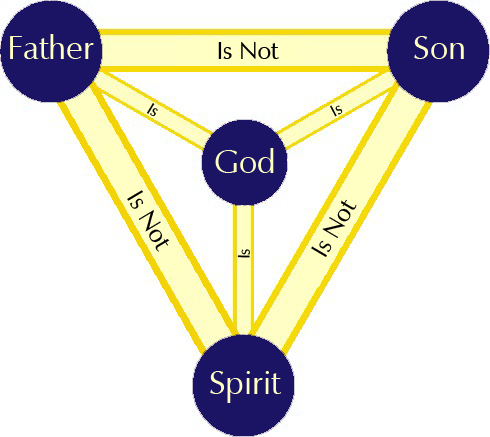
Basic Christian doctrine teaches that God is Triune. As foundational as the doctrine of the Trinity is to Christianity, the teaching is difficult to understand. The Trinity seems to be paradoxical and impossible. The doctrine of the Trinity can be summed up with the statement, “God is One God who is Three.” This doctrine does not teach God is three Gods, that God is one God with three different manifestations of His personality, nor that the three persons of the Trinity are each one third God. The doctrine of Trinity is that God is One God who consists of three persons. Each person of the Trinue Godhead is fully equal with the others and each possesses the full attributes of God. All three persons of the Trinity are eternal, all powerful, all wise, all knowing, holy, loving and perfect. Each person of the Trinity is fully God. Each is different and distinct from the other. The Father is not the Son and the Son is not the Holy Spirit. Each is different and distinct but they cannot be divided from the other. The Father, Son and Spirit do not exist separately from one another.

The starting point of the Trinity is the singleness of God. The Father, Son and Spirit are each declared to be fully God. The deity of each member of the Trinity is explictly declared in Scriptures (John 1:1; Acts 5:3-4; 1 Corinthians 8:6). It is implicitly declared in the work and nature of God such as creation, sovereignty, omnipotence and eternality. The distinction in the Godhead becomes evident in God’s dealing with man. God the Father administrates the plan of salvation and hears and answers prayers. The Son is the redeemer of man who became man. Through the death of Jesus, God the Son, man can be forgiven. The Son is the head of the church who intercedes for believers. The Son is Mediator between God and man. The Spirit applies salvation to the heart of men, convicting of sin and regenerating those who believe. The Holy Spirit is sent from the Father by the Son to indwell the believer. The Holy Spirit enables Christians to serve in the church. Each member of the Trinity exercises a different and distinct function in relation to man.

The doctrine of the Trinity is a fundamental doctrine discovered by a comparison of the Bible’s teachings. This doctrine is not a new development. This doctrine is not a New Testament development. This great doctrine does not rest upon a single verse which declares and defines the Trinity. The doctrine of the Trinity rests upon the comprehensive statements about God found throughout the Bible. It is built on statements like Deuteronomy 6:4 which proclaim a single God, “Here O Israel, the Lord our Lord is one Lord.” When the statements of the singleness and unity of God is compared to werses such as Matthew 28:19, 1 Peter 1:2 and 2 Corinthians 13:14 the Triune nature of God begins to be realized. The Bible declares God to be comprised of Father, Son and Spirit. Each of these is revealed as unique from the others. Each is taught as possessing all the attributes of God. Though the doctrine of the Trinity is not explicitly taught in one place in the Bible, it is nevertheless a doctrine unmistakably revealed throughout Bible. The basic principles of the Trinity are found as early as Genesis 1. Though the Trinity is a difficult doctrine to understand which will never fully be explained by men, it is a Biblical truth that must be believed by all those who profess to believe God’s Word.

Trinity 2

What is Lent?

The season of Lent began this week. Lent always starts on Ash Wednesday and continues until the Thursday before Easter. Lent is a season of forty days of self denial intended to be a time of intense spiritual devotion joined with self denial. Many who observe Lent “fast” from specific substances these six weeks. Others severely limit their food intake. Traditionally the Sundays of Lent are not fast days. The Catholic church prescribes that all the Friday’s during Lent be days of fasting from meat. In more recent years people have taken to giving up non-food items. Some will use Lent to “fast” from the internet, television, sports, text messaging, facebook, speeding, complainging and a host of other things. Others see Lent as a time to volunteer at at soup kitchens or attend church services more faithfully. Some churches have special prayer services or community worship services during Lent. In brief, Lent is seen as a season of self denial and spiritual renewal that is kept by Christians of all denominations.

The observance of Lent developed within the Catholic church during the 300’s AD. Because Lent has its root in early Catholicism those Christians who are part of church with a strong emphasis on liturgy and the church calendar tend to observe Lent. The forty days of fasting is based upon Jesus’ forty days of fasting in the wilderness before beginning His public ministry. A specific Biblical foundation for observing Lent is hard to find. The Bible makes no reference to a special, church wide season of fasting and self-denial. The Bible does teach self denial, but the self denial it teaches is a lifelong process of dying to self and living according to the commands of God’s Word. The Bible teaches about fasting, but it does not command Christians to fast. Nor does the Bible teach a required season for fasting, or of fasting from certain foods, whether it be on Friday, during early spring or at any other time of the year. Fasting is assumed in the New Testament, but the only commands associated with it are that fasting be done without drawing attention to the fact you are fasting. The summary of this then is that Lent is not commanded or required for Christians. While there is nothing sinful about forty days of fasting and renewed focus on one’s walk with God, those who would participate need to be careful about what is motivating observance of Lenten traditions.

Penance is the theological motivation for self denial during Lent. Penance is a form of self-punishment to show a person is genuinely repentant for his sins. Catholic teaching regarding fasting during Lent states that one is remembering the suffering of Jesus on the cross and uniting himself with His sacrifice. Some outside the Catholic church see a penitential aspect to their participation in Lent. Penance is a punishment of self to show genuine repentance. While this doctrine seems to have some worthwhile points (who doesn’t want to see real proof that a person is truly sorry for his sins?), penance is contrary to the Biblical doctrines of salvation by grace alone. When Jesus died on the cross, He suffered the full punishment of sin. When one trusts Jesus for salvation all past, present and futures sins are forgiven. Jesus endured the entire punishment of every sin the believer has committed or will commit. Since Jesus paid it all no other punishment is necessary. Not only is self punishment unnecessary, Paul says in Galatians that any who teach works of the flesh as part of salvation are teaching a different gospel. The doctrine of penance has an appearance of being spiritual, but it actually denies the fullness of Jesus’ work and relies instead on human effort.

Setting apart a season of self denial does not by itself draw one closer to God. The Bible does not teach self denial for self denial’s sake. The Bible does not teach self-denial as a shortcut to a closeness with God. One grows in Godliness by use of the regular means which God has given to His people. These means are Bible study, prayer, church attendance, good works, spreading the gospel and participating in the ordinances. Self denial to grow closer to God is a good thing, but the regular, year round means of spiritual growth cannot be bypassed by a special season of intense spiritual activity.

Does God accept to Himself a Muslim’s sincere worship of Allah?

C.S. Lewis was an excellent author and noteworthy Christian thinker. The recent big screen success of The Lion, the Witch and the Wardrobe, Prince Caspian and The Voyage of the Dawn Treader have brought a few of his works to popular attention. The Chronicles of Narnia is a seven book series that tells the adventures of the Pevensies children and their relatives in the land of Narnia. The last book of the series tells of the overthrow of Narnia by their enemies the Calormenes. The Calormenes are a warlike people who worship the vulture headed, winged god Tash. The Narnians worship the true god and creator of their world, Aslan. C.S. Lewis very intentionally uses his work to depict some of the great doctrines of Christianity. Aslan is an unmistakeable picture of Jesus. Aslan’s death on the stone table in place of Edmund retells the death of Jesus on the cross for mankind. Likewise, Lewis includes other obvious imagery. The Calormenes are a very Turkish people obviously intended to bear strong resemblance to the Muslim countries.

In The Last Battle a sincere young Calormene soldier who devoutly worships Tash comes face to face with Aslan. The soldier is terrified because he has served Aslan’s enemy all his life and he now expects to be slain by Aslan. The Lion does not kill the young man but tells him something very surprising. All the good and sincere worship that was heaped upon Tash was accepted by Aslan as given to himself. Because Tash and Aslan are complete opposites, all evil done in Aslan’s name is actually done for Tash. All good done in Tash’s name is actually done for Aslan. Though the worshiper was mistaken in the object of his worship Aslan received all good as done for him.

The theological point Lewis appears to be making is that all those who worship in goodness and sincerity will be received by God. Though they think their worship is to a different god, the true God will accept all honorable and devout worship. This argument is still being made today. Some of those who say Allah and God are the same mean to say that it doesn’t matter what you call your god. If you are sincere in your attempts to do good and serve your god, then the true God will accept your worship. Is this true? Does God accept all sincere worship as if it was done for Him?

Recently I answered the assertion that Allah and God are really the same god. In March of last year I addressed why sincere worship is not by itself acceptable to God. God does not accept well intentioned but misplaced worship, because He accepts none apart from Jesus. Jesus Himself said, “I am the way, the truth, and the life: no man cometh unto the Father, but by me.” (John 14:6) Only Jesus has done that which is acceptable to God. God does not accept any man because of sincerity or goodness. God does not accept any worship apart from Jesus. God only accepts those who have been made righteous in Jesus.

The apostle Paul confronted the Athenians for their sincere but wrong worship. Acts 17 shows that they were deeply religious. They were so careful in their worship they built a statue to the unknown god in case they accidentally overlooked the worship of a god. Paul came to Athens and taught them of the the god they did not know. He did not comfort them that God accepted their sincere worship. He told them who is the true God and instructed them to repent of their wrong worship because God would judge them. Their well intentioned worship was not acceptable to God. In fact, their rejection of the gospel showed they were not seeking to truly worship God. Their worship of another god was rebellion against God. They did not want to worship the true God. So it is with all who worship another god. Their worship is not acceptable to God because it is in fact rebellion against Him. Only those who have trusted Jesus for the forgiveness of sin are redeemed by His blood and are accepted of God.

How do I know if God is speaking?

Many people experience the sensation of a spiritual force speaking to them outside the normal senses of man. Many religious people have had the experience of being in communication with God. The challenge facing those who think they may have heard God speaking is the uncertainty of rightly interpreting the source of those influences. The ability to distinguish between the voice of God and one’s own sinful longings. How does one separate the voice of God from the urgings of one’s own flesh and from evil temptations?

I am a strict cessationist, stricter even than many of my fellow cessationists. A cessationist is one that believes, among other things, God is no longer giving new revelation to man. God stopped talking directly to men when the Bible was completed and now speaks exclusively through His Word. He does not guide men through dreams, visions or voices. He guides men through the Bible. This does not deny the work of the Holy Spirit to give a person understanding of the meaning of the Bible nor the work of the Spirit to convict of sin and apply the Bible to the individual’s life. The Holy Spirit’s work takes place through a renovation of the heart and mind not through promptings or inner impressions.

God is speaking when you read and rightly understand His Word. His voice is clear and unmistakable. All other voices are ambiguous and leave the individual attempting to navigate a maze of pitfalls in the attempt to determine whether or not a voice is of God. Our own senses are very easily deceived. Mr. Scrooge was right on target when he argued with Marley’s ghost about the gullibility of the senses. “A little thing affects them. A slight disorder of the stomach makes them cheats. You may be an undigested bit of beef, a blot of mustard, a crumb of cheese, a fragment of an underdone potato. There’s more of gravy than of grave about you, whatever you are!” The unreliability of our senses, especially the internal impressions, makes it paramount that Christian’s have an accurate scale by which to measure out the true value of our sensations.

When reading the Bible there is no doubt about its source. The will of God is clear in the Bible. You know God is speaking when you read His Word. When you obey what He says in His Word you will know His power, His care and His guidance over your life. This will never fail. Though there may be times when you do not perceive the Lord to be as close as at other times, He will remain true to His promises. He will never leave you nor forsake you.

Let me offer some closing thoughts for those who are now mad because I have seemingly denied the working of the Holy Spirit and the miraculous guidance of the Father in your life. Though you may believe God speaks in ways outside His Word, never imagine that He speaks without His Word. One cannot neglect the Word for a sensation of a conversation. One cannot let inner promptings guide him down a path that contradicts the plain commands of the Bible. God never speaks without His Word. Do not allow an experience or the desire for an experience to be more important than God’s Word. Remember the words of Peter, “We have a more sure word of prophecy, whereunto ye do well that ye take heed; as unto a light that shineth in a dark place.” (2 Peter 1:19)

Do Christians have guardian angels?

When the topic of guardian angels comes up I imagine an angel assigned by God to a particular person to protect him from harm and temptation. Guardian angels are familiar to many because of their inclusion in popular movies and television. Guardian angels are a popular idea with many, but what does Bible say about guardian angels?

The Bible tells that angels were created by God, but doesn’t say exactly when. (I think angels were created on day one of the creation week.) We know there are a myriad of angels, but the Bible doesn’t tell us how many. It tells how some angels rebelled against God and lost their heavenly position. The Bible says that angels are the servants of God who reside in heaven always worshiping Him. The prophetic passages of the Bible show angels as the agents of God’s wrath. They carry out some of the punishments wreaked upon the world, call forth other judgments and gather people together to stand in judgment before God. Angels are messengers of God sent from Him to reveal God’s Word to certain prophets. Angels are heralds of God announcing the return of Jesus and His triumph over the world.

Three Bible passages refer to angels playing a role in the life of individual believers. Psalm 91:11, “For He shall give His angels charge over thee, to keep thee in all thy ways.” Hebrews 1:14, “Are not (angels) all ministering spirits, sent forth to minister for them who shall be heirs of salvation.” The other passage is often understood to describe angels assigned to children. However, the context of Matthew 18:10 makes it clear that the little ones in view are not children but the followers of Jesus. “Take heed that ye despise not one of these little ones; for I say unto you, that in heaven their angels do always behold the face of my father which is in heaven.”

In all three passages the people under angelic care are the people of God. If there are guardian angels one must conclude they are assigned to believers but not to every person on earth. Unfortunately the passages are all very brief and somewhat cryptic. While they may teach an angelic guardianship, there is enough uncertainty in the correct understanding that reaching a definite conclusion about the nature of the ministry of angels to believers is very difficult. We can conclude some things are definitely no longer a part of angelic minsitry. Because God’s revelation is completed in the Bible, we can conclude angels do not appear to people as special messengers with prophetic words from God for men. Because God is now working in the church, we can conclude that angels are not actively involved in aiding God’s people in military conquest over nations. It seems likely that angels are actively involved in the work of the ministry, the encouragement of the saints and the spread of the gospel. What that activity looks like the Bible does not tell.

Most of our ideas about the ministry of angels today are speculative. While we know there is a great spiritual battle going on, we need to be careful to not speculate too much about what God has not revealed. We especially must remember to not pray to angels or trust in them for safety. Angels are the servants of God. They do not want, nor will they accept, human worship. They do not act on their own initiative, but are the agents of God going out at as He commands to do His bidding. Whatever the role angels play in the believers life God is the One who deserves our worship, praise, adoration and thanks.

What is the rapture?

In recent years the rapture has been brought to popular attention through the Left Behind series of books and movies. The rapture is a doctrine that has caught the public’s attention time and time again since the mid-1800’s. Though some opponents claim the rapture is a recent theological development, church history reveals the rapture was believed and taught very early in the second century just decades after the death of John, the last living apostle.

The rapture is the event when Jesus resurrects the bodies of believers who have passed away and carries off the earth all living believers. The rapture is the next event of world history that has been foretold in Bible prophecy. When the rapture happens every Christian on the earth will suddenly be gone. Some teach that the rapture will take place in waves, with faithful Christians going up at the beginning and others at later times during the Tribulation depending on how faithful they have been. The Bible gives no hint of a partial rapture. In every place it discusses the catching away of Christians the promises includes all believers. None of God’s children will be left behind. Paul says in 1 Thessalonians 4:17, “We which are alive and remain shall be caught up together”. All living believers will be caught up with the Lord when He comes for His church. This is indeed a great comfort to Christians.

Three passages in the New Testament speak of the rapture: John 14:1-3; 1 Corinthians 15: and 1 Thessalonians 4:13-18. Two of the three passages are intended to give comfort to Christians and the third encourages faithfulness in Christian service. As a result, many questions about the rapture cannot be answered from direct Biblical teaching, Those who think about the rapture make many deductions based on other Bible doctrines and logical reasoning. When describing the rapture, great care needs to be taken to separate deduction and speculation from Biblical teaching.

The Bible describes the rapture as taking place with the shout of an archangel and the sound of an angelic trumpet. Jesus will descend from heaven into the earth’s atmosphere, but He will not descend all the way to the earth. All believers, living and dead, will then ascend into the air to be united with Jesus. At the rapture, all the saved will be transformed. Their physical bodies will be replaced with glorified, spiritual bodies. The change will happen more quickly than the eye can see. The raptured saints will then be taken into heaven and begin to enjoy eternal joy with the Lord.